Scan, Don't Shout: The Quiet Case for a Small QR Square on the Masjid Noticeboard
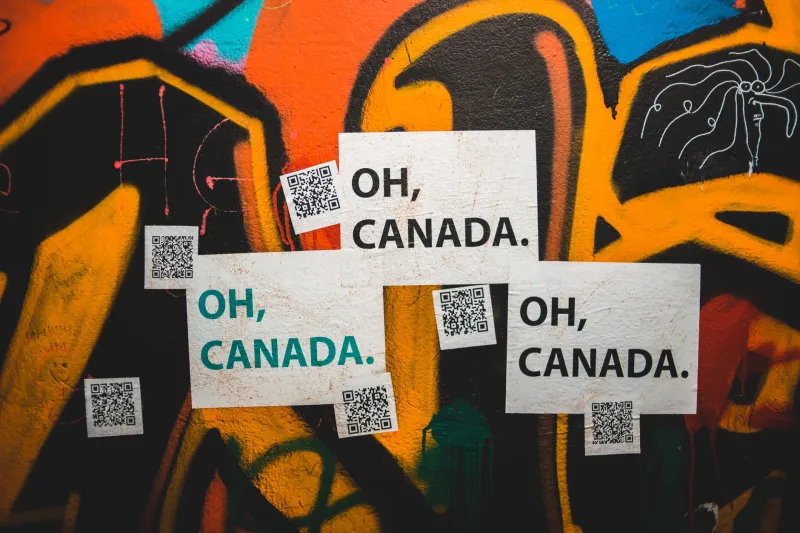
Walk past the noticeboard in most UK masjids after Jummah and you'll see the same thing: a layer of A5 flyers, half of them curling at the corner, advertising everything from Arabic classes to a brothers' football team to a removals firm in Small Heath. Someone, somewhere, is reading them. That's the point. The board isn't dead — it's just badly connected to the internet.
A QR code is the cheapest bridge we have between that board and a proper listing. But there's a right way and a very irritating way to use one. Here's the practical version.
The board is a noticeboard, not a billboard
Start with the obvious: you're a guest in that space. Nobody asked you to be there. The masjid committee puts up with flyers because they serve the community, not because they're running an ad network.
So the first rule is scale. One A5 sheet, one clear message, one code. Not a wall of six posters for your car detailing side hustle. If you want to be allowed back next month, behave like a person leaving a note for a neighbour rather than a brand buying out the corridor.
Ask first, too. Most masjids and community centres have a named person — often the secretary or the facilities volunteer — who decides what goes up. A two-line WhatsApp asking permission takes thirty seconds and saves you the indignity of finding your flyer in the bin by Asr.
What actually belongs on the paper
You have roughly the attention span of someone putting their shoes on. That's your budget. Spend it like this:
- One line saying what it is. "Sisters' sewing classes, Tuesdays, 10am" beats "Empowering Creative Journeys" every single time.
- One line saying where. A postcode, a venue name, or a neighbourhood people recognise.
- One line saying what to do. Which is where the code comes in.
- The code itself, big enough to scan from arm's length without doing that awkward lean.
Everything else — your logo, your Instagram handle, your life story — is optional. Nobody scans a code because the poster was beautifully designed. They scan it because the poster told them something they wanted and made the next step obvious.
Write the call to action like a human
"Scan here for more info" is fine but a bit flat. Try something with a destination in it:
- "Scan to see the full listing and photos"
- "Scan to check sizes and prices"
- "Scan to book a slot — six left"
Notice what all three do: they promise a specific thing on the other side. The scan isn't the reward; the page is. If someone taps through and lands on a homepage that talks about your company values, you've wasted the one moment of attention the board gave you.
The landing page has to keep the promise
The QR code should go straight to the listing itself — the individual item, class, service or event — not to a generic front page and definitely not to a link-in-bio maze.
That means:
- The headline on the page matches the headline on the flyer, word for word if possible.
- The photos are honest and current. If the sofa in the photo is the sofa on the flyer, say so.
- There's a price or a clear starting price.
- There's one obvious way to get in touch, and it works on a phone at 9pm.
- It loads fast. Half the people scanning are doing it on patchy 4G standing in a car park.
Testing with a patchy signal isn't paranoia. Load your own listing on mobile data, on an old phone if you have one, and see what the experience actually feels like.
Working out which flyers earned their keep
This is where most people give up, because paper doesn't report back. You have two cheap options.
Unique links per location. Make a separate short link for the East London board and the Bradford one, even if both point to the same listing. Any decent link shortener will show you scan counts. Two minutes of setup, and after a fortnight you'll know which venue is worth the printing money.
Just ask. Put a line in your enquiry reply: "Out of interest — did you find us on a flyer, or somewhere else?" People answer this more often than you'd think, and the answers are frequently surprising. A lot of sellers assume Instagram is doing the work when it's actually a laminated sheet near the wudu area.
You don't need a dashboard. You need to know whether to print fifty more or stop entirely.
Where the line sits between helpful and spam
Every community space has a saturation point, and once it's crossed, people stop reading the board altogether. That hurts everyone, including the masjid's genuine announcements about funerals, classes and fundraising.
A simple self-check before you print:
- Would I be annoyed to see four of these from the same person?
- Does this flyer give something to the reader, or only take attention?
- Am I removing my old one before putting up a new one?
- Have I asked the person who runs the board?
That last one matters more than the rest combined. The volunteers who maintain those boards are the reason your listing has an audience at all. Treat them like partners, not infrastructure.
A small square, doing quiet work
Nobody is going to gasp at a QR code in 2026. It's not clever anymore — it's just plumbing. Which is precisely why it works. The code asks nothing of the person scanning it beyond a thumb, and the flyer asks nothing of the masjid beyond a corner of corkboard.
Done well, the whole chain is unremarkable: someone sees a line about a bike, scans, reads the listing, sends a message, arranges collection. No algorithm, no ad spend, no boosted post. Just a paper square doing what paper squares have always done, with one extra step.
Get the manners right, keep the promise on the other side of the scan, and count what comes back. That's the whole playbook.